AAP abstract reports household vaping exposure and childhood asthma concern
An American Academy of Pediatrics conference abstract reports a link between household e-cigarette exposure and asthma flare-ups in children, with UK advice still stressing proportionate caution around children and people with asthma.
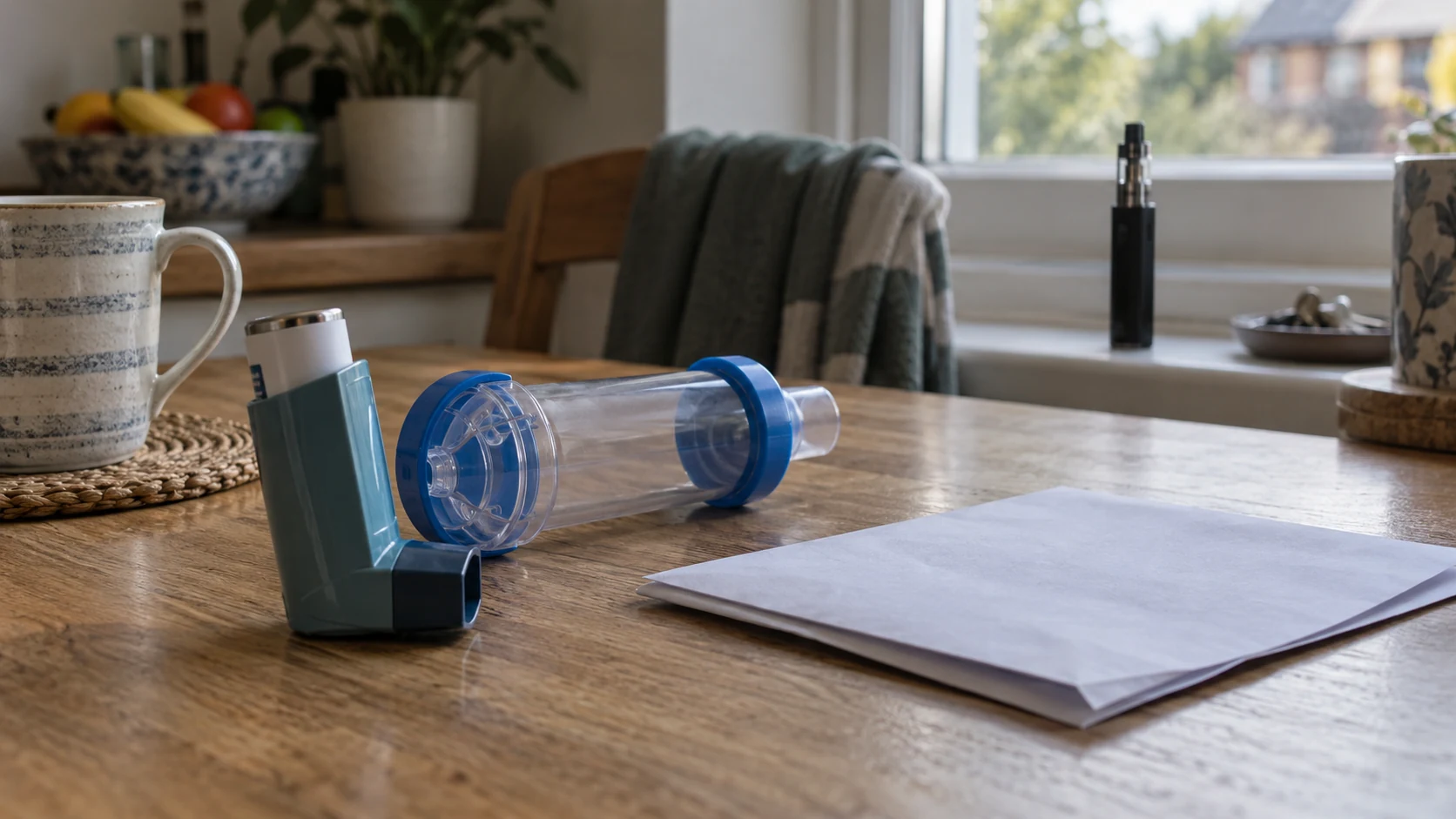
The American Academy of Pediatrics has highlighted a 2026 conference abstract reporting an association between household e-cigarette exposure and asthma flare-ups in children. The abstract, titled Parent-Reported Household Tobacco and E-cigarette Exposure and Asthma Control in Children: A Cross-Sectional Study, is listed in the AAP National Conference and Exhibition media kit for presentations taking place from 2 to 6 October 2026.
The AAP summary says household use of both tobacco and e-cigarettes was reported in 5% of clinic visits, tobacco-only use in 9%, and e-cigarette-only use in 3%. It also says the abstract linked household e-cigarette exposure with children’s asthma flare-ups. The public summary does not provide the full methods, effect sizes or peer-reviewed paper, so the result should be treated as a signal from conference research rather than settled proof about cause and effect.
How to read the finding
The finding is still relevant for adult UK readers who smoke or vape, because it concerns exposure in the home rather than youth vaping by the children themselves. It does not mean vaping and smoking carry the same risk. UK health guidance continues to describe nicotine vaping as less harmful than smoking for adults who switch completely, while also stating that vaping is not risk-free and that children and non-smokers should not vape.
There is also a difference between lower relative risk and no practical concern. NHS guidance on passive smoking says the risks of passive vaping appear small compared with tobacco smoke, but advises as a precaution not to vape around babies and children where possible. Its vaping myths page adds that people should be considerate around those with health conditions such as asthma, who may be more sensitive to vape aerosol.
Existing evidence is cautious
A 2024 paper indexed by PubMed looked at 54 children with asthma and home exposure to e-cigarette aerosols. It did not find a statistically significant correlation with asthma exacerbations, but the authors reported a possible increase in asthma symptomatic days and called for further research. That smaller study and the new AAP conference abstract point in the same cautious direction: the evidence base is still developing, and household exposure deserves more attention.
For adults using vaping to avoid smoking, the most useful takeaway is practical rather than alarmist. Switching completely away from cigarettes remains the key harm-reduction step, but vaping in shared indoor spaces around children or people with asthma is avoidable. Keeping homes and cars free from smoke, and being careful with vape aerosol around vulnerable people, is a sensible boundary while the evidence continues to develop.
Sources
Checked
Original source published .
- American Academy of Pediatrics 2026 National Conference & Exhibition Media KitAmerican Academy of Pediatrics ·
- Passive smokingNHS ·